Initial offers by Illinois’ attorney general to settle a dozen lawsuits linked to the state’s mishandling of fatal Legionnaires’ disease outbreaks at the Quincy veterans’ home have been so sparse, some families are calling them “insulting.”During Kwame...
Lake Street El
Brace yourself, Chicago.
On Wednesday, Mayor Lori Lightfoot will deliver a prime-time “State of the City” speech that will kick off the Chicago’s months-long 2020 budget process. And it looks to be another rough one.
No one knows exactly what the deficit is just yet, but estimates range from $500 million to north of $700 million to more than $1 billion. The mayor herself hasn’t revealed how big the gap is, but is expected to Wednesday night. Either way, the financial picture is still not pretty, despite a litany of taxes – and some new ones the mayor is considering. Here are some key terms to understand as Chicago’s budget season gets underway - and be sure to listen to the speech live on WBEZ 91.5FM on Wednesday at 6 p.m
Property Tax Levy

Chicago government gets the largest single portion of its money from taxes paid by homeowners and anyone who owns property in the city. If property taxes are the city’s salary, increasing the property tax levy is the city’s way of getting a raise. Every year, city officials can ask for more money for government services, and elected representatives can say yes or no. (In 2015, Chicago alderman made the unpopular decision to approve four years of increases.) Lightfoot campaigned against raising property taxes, and has vowed to cut the budget before raising this tax again.
Pension Obligations

Speaking of growing bills, the City of Chicago in 2020 will have to come up with about $280 million more than it did last year to pay into its pension funds. Right now, the accounts that pay benefits to more than 118,000 city workers and retirees are projected to be about $28 billion short. This is the city’s “unfunded pension liability.” In order to start catching up after decades of underfunding, the city must make ever-rising pension contributions that are crowding out other government priorities.
Real Estate Transfer Tax

If you buy a home in Chicago, this is a one-time tax you pay when the sale goes through. The current rate set by the city is $3.75 on every $500 of the purchase price. (So if you buy a $250,000 home, you pay the City of Chicago $1,875 at closing.) But last year, affordable housing advocates suggested increasing the rate on homes over $1 million to help reduce homelessness. On the campaign trail, Lightfoot said she supported that idea. But as she stares down the city’s gaping budget hole, the mayor may instead put new revenue like this toward closing the deficit.
Structural Deficit

A structural deficit is when your bills consistently cost more than your paycheck. In other words, you’re living beyond your means – even if your salary goes up. Chicago has done this for decades, through economies both weak and strong. According to the most recent annual financial analysis, city officials have chipped away at the problem. But the balance sheet for 2020 is still projected to be in the red. On Wednesday, Lightfoot is expected to reveal how big she thinks the deficit is and how she plans to help close it.
Recreational Marijuana Tax
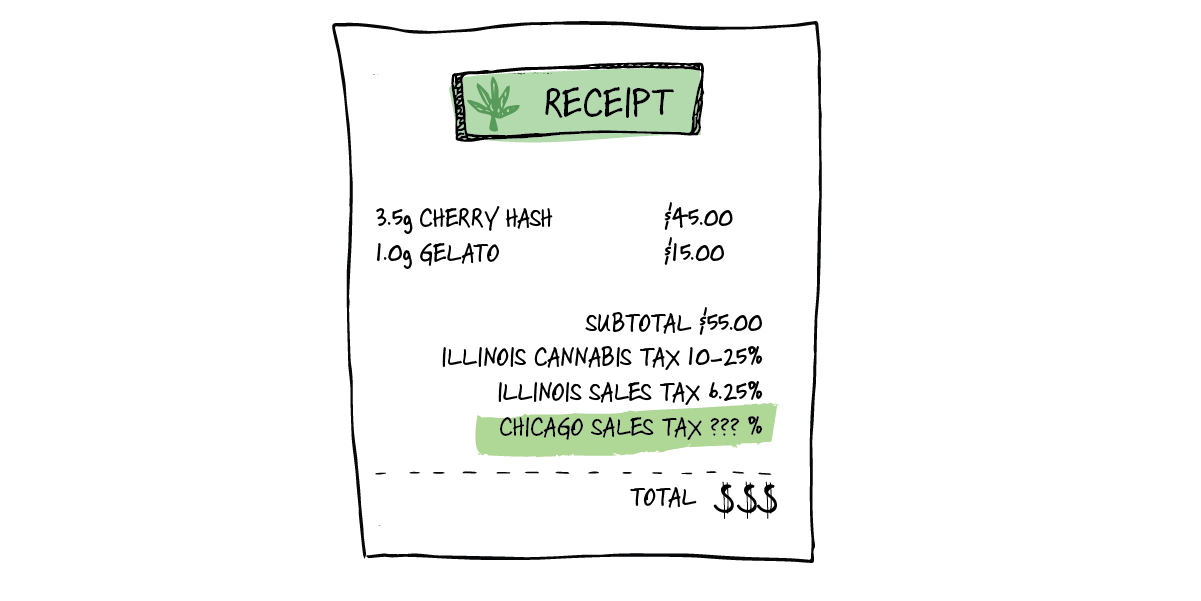
Illinois recently voted to legalize recreational pot, starting next year. The law passed by the state legislature allows cities and towns to tax the sale of weed to make money. Chicago can impose a tax of up to 3% on all recreational marijuana sales. It’s not clear whether Lightfoot will go after the full 3% tax or something smaller. It’s also not clear how quickly Chicago – or any town in Illinois – might see that tax money flowing in because Illinois’ recreational marijuana industry is just getting started.
Debt Service

Chicago has a lot of outstanding IOUs. In fact, if the city spread all its debt out across every Chicago resident, each one would owe about $3,100, according to the most recent Comprehensive Annual Financial Report. “Debt service” refers to the payments the city has to make to investors and people who lent it money for things like new libraries, road construction and airport renovations. Think of it as Chicago’s credit card bills, mortgage, and car loan payments. Next year, the city’s debt service is expected to top $647 million.
Professional Services Tax
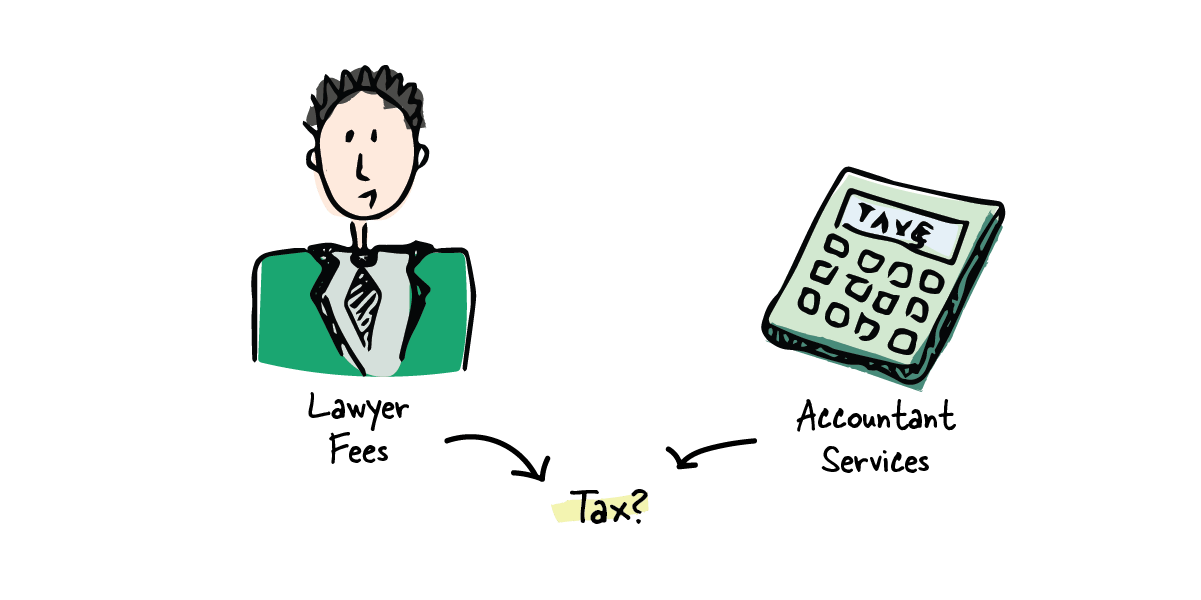
The state of Illinois does not tax services, like when you get a haircut or use an accountant. Lightfoot wants the state legislature to allow Chicago to start taxing some of these services - in particular, high-end professional services such as legal work and accounting. Josh Ellis, vice president of the Metropolitan Planning Council, put it this way: “You go to Jewel and you buy toothpaste, toilet paper, and apples and you pay sales tax on those items. Here you’re paying for three hours of a lawyer’s time, and you pay a service tax on that.” Ellis said tapping this revenue stream is long overdue because Chicago’s economy is increasingly service-based.
Collective Bargaining Agreements
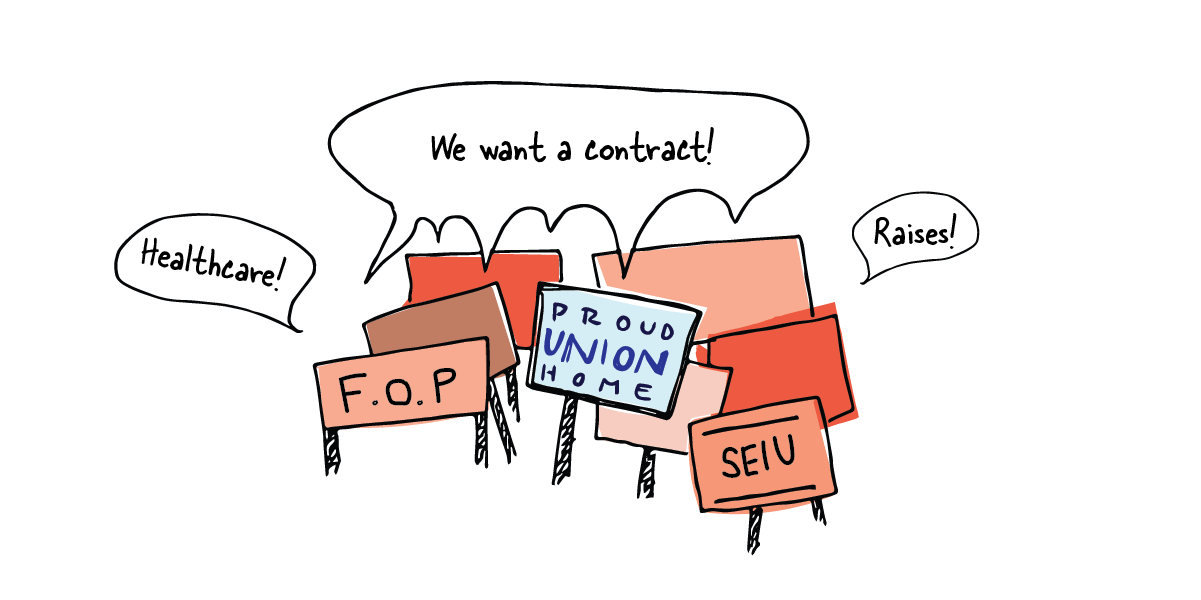
The City of Chicago has 43 different collective bargaining agreements with various unions representing public workers. All of these outline city workers’ pay and working conditions. Six are up for renewal and are in active negotiations. Any pay hikes agreed to in the final contract deals will need to be accounted for in the budget. With some of the largest contracts – for police and firefighters – still under negotiation, the city will have to leave a pretty large question mark in the middle of next year’s budget.
Legal Settlements

Every year, people sue the City of Chicago. At any given time, the city’s lawyers are dealing with hundreds of cases - from small claims to high-profile police misconduct suits, such as the one following Laquan McDonald’s killing. When the city loses or settles a case, the City Council has to approve any payouts. That’s hard to budget for because the cases often take years and the amounts vary widely. For example, in 2018 the city budgeted nearly $47 million, but paid out nearly triple that in legal settlements and fees. Lightfoot will have to figure out how to estimate that number as she wrestles with a big deficit.
Bond rating

Think of this as a city’s credit score. It’s a label that signals to lenders how reliable the city is in paying back the money it borrows. And spoiler: Chicago’s bond ratings are not great. While it’s normal for cities to borrow money to build stuff, like an airport or a new library, Chicago has also taken out loans to cover general expenses. Too much borrowing can hurt a city’s bond rating in the same way running up a credit card bill can lower a person’s credit score: It becomes more expensive to borrow later.
Becky Vevea covers city politics for WBEZ. Follow her on Twitter at @beckyvevea. Paula Friedrich is WBEZ's interactive producer. You can follow her at @pauliebe.
Residents of a 26-unit, Humboldt Park apartment building say they’re afraid they’ll be unable to remain in the heart of Chicago’s Puerto Rican community as gentrification spreads.The complex stands next to one of the towering, steel Puerto Rican flags ...
The work pays homage to Chicagoans like Harold Washington and Jean Baptiste Point du Sable.
The company that owns Arlington International Racecourse in northwest suburban Arlington Heights said Wednesday it’s considering moving to another location and has not applied for a casino gaming license.
The statement from Churchill Downs Inc. said it...
Sports betting is days away from becoming legal in Indiana and the state's casinos are lining up to start collecting wagers.Indiana will become the 12th state — and the first in the midst of major Midwest markets — with sports betting when a ...
A survey from OutPost24 revealed that a third of businesses surveyed admitted to a security incident in their cloud service. This episode goes through the other data points in the curvey and talk about cloud security practices.
Source: https://www.infosecurity-magazine.com/news/over-third-firms-have-suffered/
Be aware, be safe.
Become A Patron! Patreon Page
*** Support the podcast with a cup of coffee *** - Ko-Fi Security In Five
Don't forget to subscribe to the Security In Five Newsletter.
—————— Where you can find Security In Five ——————
Security In Five Reddit Channel r/SecurityInFive
Security In Five Podcast Page - Podcast RSS
iTunes, YouTube, TuneIn, iHeartRadio, Spotify, Stitcher
Email - bblogger@protonmail.com
On a recent summer day, mothers and toddlers gathered in north suburban Skokie to make paper puppets together.It’s part of a play group organized through Ready For Success, a comprehensive program that aims to extend the reach of the local school distr...
A new affordable housing development aimed at spawning an artistic community is opening on Chicago’s South Side.
With a potential teachers strike looming next month, the Chicago Teachers Union and the school district are busy airing competing talking points to try to shore up public support.The union rejected contract terms recommended by an independent...
Cook County’s public health system expects to provide an estimated $544 million in medical care this year that it won’t get paid for — the highest amount in at least six years.
Reading and math test scores for Chicago Public Schools students remained flat this year after a decade of significant improvement.
Nearly 63% of elementary school students met national norms in reading and 57% did so in math, according to the results released Tuesday.
This comes as newly-installed members of the Chicago Board of Education have questioned both the test itself, the NWEA MAP, and the way the results are used as a measure of a school’s quality.
Chicago uses the NWEA MAP as a key criterion to rate schools and for grade promotion, but it is not the state-mandated standardized test. Results of the state test are expected in October. School ratings look at how well students score on the NWEA MAP and how much students grow each year.
Loading...
When asked to approve some changes to the school rating policy in June, some board members said they were uncomfortable with the heavy reliance on test scores. Test scores are tied to socio-economic status and not necessarily the quality of a school, they said. Schools serving poor students will always do worse, noted board member Dwayne Truss.
Truss also was concerned that the school district did not vet the changes to the policy with parents and community members. He pointed out that these ratings are important because parents use them to make decisions about where to send their children to school.
Also, board member Sendhil Revuluri said he was not comfortable with the use of the NWEA MAP. It was not designed to assess student achievement, but rather as benchmark exam to help teachers identify student weaknesses.
At the June board meeting, CPS CEO Janice Jackson defended the school district’s rating system, but agreed to undertake a process over the next year to reevaluate it.
On Tuesday, Jackson said she believes in using test scores as part of the way the school district rates schools and measures students. She said the district needs an objective measure of how students are performing compared to their peers. Not having such a measure, she said, would be a disservice to students.
“We can’t sell out kids short and tell them that those things don’t matter when everyone knows that key decisions about life after high school are based on how you perform in high school,” she said.
Jackson said she is focused on trying to boost performance on the test. The key to doing that, she said, is to make sure all students are getting the same quality of education.
“We are not going to meet the goals that are outlined in our vision unless we focus on equity and focus on improving the disparate outcomes of students of color and their peers,” she said.
The school district did not release test score data by race and ethnicity. School level data shows that 76% of the schools where less than half of the students met national norms in reading were majority black. Majority black schools make up only 46%of all schools in the district.
Jackson said Latino students are making better gains than black students.
Jackson said she and her education chief are “betting” on a $40 million undertaking in which the school district is developing curriculum for every grade and every subject. She said this will ensure all students have access to the high-quality lessons, though teachers will not be mandated to use it.
She also said the school district needs to have a certified teacher in front of students every day. This is an issue in Chicago. A WBEZ analysis showed that a third of Chicago Public Schools last year had a year-long teacher vacancy, which leaves them with little instruction for months.
Search here for individual school test results
The “national average performance” percentiles reflect the percentage of students who score at or above the national average for their grade level on the NWEA exam. The “national school growth” percentile — labeled below as growth — offers a comparison of how far a school’s students advanced compared to students on average across the country who started at the same level. A score above 50 signals that a school’s growth is outpacing the national average; lower, and it’s falling behind.
Sarah Karp covers education for WBEZ. Follow her on Twitter at @WBEZeducation and @sskedreporter.

An administrator resigned amid sexual harassment accusations. Another college hired him. A professor was found to have stalked a coworker. She agreed to retire, then won a Fulbright grant. Campus leaders vow reforms, but many say it’s a long road.
We hear the term PII quite a bit. Personally Identifiable Information is at the center of the privacy discussion but what is it? This epsiode talks about the challenges of defining what PII is.
Be aware, be safe.
Become A Patron! Patreon Page
*** Support the podcast with a cup of coffee *** - Ko-Fi Security In Five
Don't forget to subscribe to the Security In Five Newsletter.
—————— Where you can find Security In Five ——————
Security In Five Reddit Channel r/SecurityInFive
Security In Five Podcast Page - Podcast RSS
iTunes, YouTube, TuneIn, iHeartRadio, Spotify, Stitcher
Email - bblogger@protonmail.com
It looked like your typical back-to-school cookout.At a local park in west suburban Naperville over the weekend, barbecue was piled on paper plates and kids ran around playing tag.But there was more going than appeared on the surface.The cookout was ho...
A group of Democratic lawmakers from Illinois on Monday called for more federal resources to ensure a robust census count in the state. They also accused the Trump administration of deliberately trying to undermine next year’s census.
“We have an admin...
A coalition of community groups is giving Chicago Mayor Lori Lightfoot the low grade of ‘D’ as she looks toward marking her 100th day in office on Wednesday.The groups, all members of the political entity called United Working Families (UWF), issued a ...
Kiara Lanier is a singer and an actress from Chicago who you might recognize from Showtime’s The Chi, Fox’s Empire and American Idol or even Chance the Rapper’s Acid Rap. As both an actress and musician, Kiara’s presence is captivating. Her l...